Showing posts with label World Bank. Show all posts

Mar 1, 2012

World Bank: Reduction of Extreme Poverty

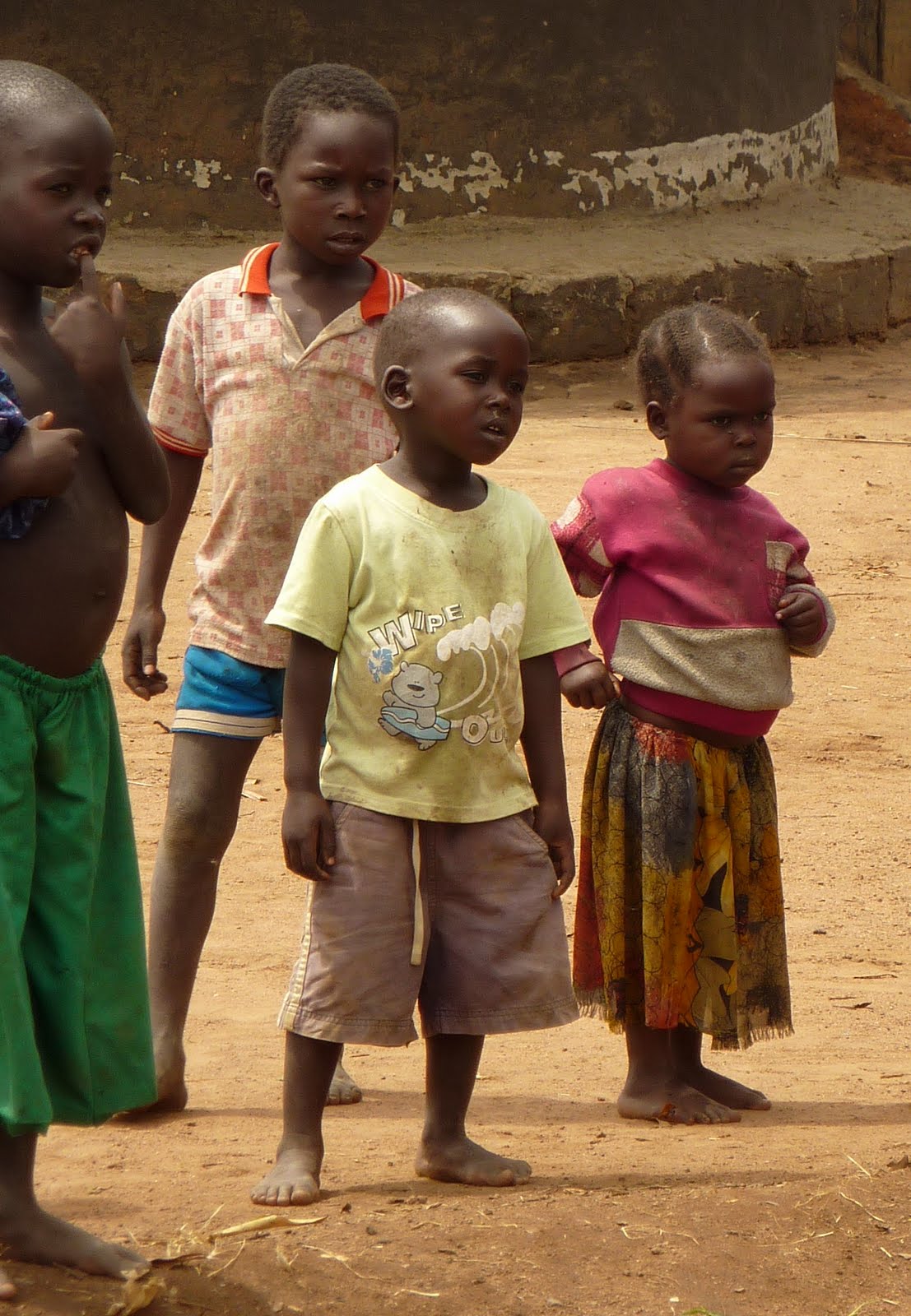
According to the World Bank, developing nations have already met the Millennium Development goal to halve extreme poverty by 2015. Martin Ravallion, director of the World Bank research group has said that , "We are now confident that the developing world as a whole has reached the first of the Millennium Goals and reached that goal in 2010 despite the crisis". Eastern Europe, the Middle East, East Asia (including India and China) are all regions that have achieved this Millennium Development goal.

Among the regions that have reduced their poverty rates China, the Middle East, and North Africa specifically have made great progress. In 2008, there were 660 million fewer people living under $1.25 a day in China. While in the Middle East and North Africa, the 16.5 million who lived on less than $1.25 a day in 1981 was reduced to 8.6 million people in 2008.

While progress is still necessary, the research done by the World Bank reveals that our international community has already made great strides in global poverty reduction.

-Akshika Patel


SOURCE: Huffington Post

Jul 22, 2011

Ban Ki-moon: Global Aid For Trade Is Vital For Boosting Development


United Nations Secretary General, Ban Ki-moon, addressed the WTO's Third Global Review of Aid for Trade in Geneva on July 19th. He urged the donors to maintain their support of "Aid for Trade." These efforts help developing countries, especially the poorest, accelerate their development and benefit from economic growth.

Aid for Trade was launched by the World Trade Organization (WTO) more than five years ago and it specifically helps developing countries develop trade-related skills and infrastructure in order to benefit from WTO agreements and expand trade.

Ban stated that Aid for Trade is crucial for building global partnerships and for global development.

However, with the economic decline, budgets are tight. "this is no excuse for letting up our efforts," stated Ban. The Secretary-General stressed the need to pay attention to the needs of the least developed countries and ensure that they are not left behind.

Another main topic of the speech was the necessity of sustainable development. "Meeting our development goals is ultimately about building self-sufficiency and helping people feed themselves," said Ban.

-Gabrielle Gurian

SOURCE: UN NEWS WIRE


Jun 24, 2011

New Agriculture Price Risk Management Tool To Help The Poor


Just a day before Agriculture Ministers from G-20 countries convene in France to discuss how to resolve the issue of global food price volatility and its effect on development, The World Bank has launched a risk management tool that can protect the food producers and consumers from the negative effect of price volatility. The risk management tool called The Agriculture Price Risk Management product, or APRM, will initially be deployed by the International Finance Corp. and JPMorgan Chase. Both IFC and JPMorgan will commit $200 million worth of credit exposure each to clients using specific price hedging products which will protect them from price volatility.

The World Bank President Robert Zoellick said “With this new tool, we can help farmers, food producers, and consumers protect themselves against price swings, strengthen their credit position, and increase their access to finance. This tool shows what sensible financial engineering can do: make lives better for the poor.” IFC expects to partner with other banks in the future as well in order to provide the poor farmers with the risk management tool.

-Nisha Noor

SOURCE: DEVEX

Apr 19, 2011

Initiative Against Corruption in Construction Sector


The World Bank is about to launch an initiative in order to address what has become not only a big problem of management but also one of the big excuses for countries and people not to donate to development efforts: corruption, inefficiency and mismanagement, in this case in the construction sector. OECD estimates that these three factors add some 10-30% to the total value of any given construction project; but they also mean less building quality, which can deteriorate users living conditions or even costs lives in regions vulnerable to natural hazards like earthquakes, floods or hurricanes. The construction sector is one of the less transparent and prone to corruption due to the big amount of transactions and contractors involved and its tendency to bribe politicians and officials and to influence the political sphere of a country.

This new initiative will try to tackle the problem by enhancing transparency, efficiency, accountability and expert management and design to construction projects and their associated administrative processes. The construction sector is one of the most important for developing nations, since it is the one in charge of building and maintaining infrastructures and housing, widely seen as pillars of development. The initiate is supposed to include construction companies, governments and civil society in making the sector more transparent and efficient.

British foreign aid agency (DFID) has already conducted a $7.3 million pilot project called Construction Sector Transparency Initiative (CoST) involving eight nations that joined voluntarily: United Kingdom, Ethiopia, Guatemala, Malawi, Tanzania, Philippines, Zambia and Vietnam. Several other countries are interested in CoST, which has attracted far more countries than intended when it was initially designed. So far, the results have been good, despite some loses detected, which are attributed to poor design or lack of capacities of the participant countries administrations. Still, CoST "fathers" state that the project has the potential to change for better the whole international construction sector. Maybe that is why the World Bank will take CoST as the seed of its own worldwide initiative against corruption in the construction sector. If this initiative succeeds, it will mean a major boost for developing nations, since it will attract more investors by saving time, money, and most importantly, lives.

- David Nebreda

SOURCE: trust.org

Mar 22, 2011

International World Water Day


Today we celebrate the International World Water Day. This event has been celebrated every 22nd March since it was designated so by the UN General Assembly in 1993, as a means of focusing attention on the importance of freshwater and sustainable management of water resources.

Each year the International World Water Day highlights one particular aspect of water. This year it regards water and urbanisation, with the motto "Water for Cities: responding to the urban challenge." In the past years, other subjects were treated, such as water scarcity, sanitation, water quality, transboundary waters, disasters, or water and culture. More than 800 events are taking place today to commemorate this day, being the main one located in Capetown, South Africa. A number of agreements and treaties are being signed this day too, like a Memorandum of Understanding to face water challenges between Secretary of State Hillary Clinton and World Bank President Robert B. Zoellick.

- David Nebreda

SOURCE: UN WATER

Mar 15, 2011

US Treasury Secretary Warns Not To Slash Aid


Two weeks ago, US Treasury Secretary Timothy Geithner warned the Senate Foreign Relations Committee that it was a matter of national interest that the US keeps supporting the World Bank and other multilateral development organizations. These contributions mean just a 5% of the whole foreign assistance budget, but they can mobilize funds that add up more than 150% of the budget. Therefore, funding the World Bank and other development banks such is one of the most cost-effective ways the US has to promote its interests in developing countries.

But there are also main economic security concerns in this warning. According to Timothy Geithner, a real risk can be found in withdrawing US funds from these organizations, (and development aid in general): that the US place can be taken by other countries, like China. Several Senators and Representatives have expressed their concerns about China's quick economical expansion in places like South America, Africa or Asia. A step back in foreign aid funding will inevitably cede influence to China and other rising powers, as for many countries the only alternative to the World Bank is actually China.

- David Nebreda

SOURCE: AFP

Feb 12, 2011

World Bank To Double Its Aid To Africa To Achieve MDGs


The World Bank has committed to fund development projects to help Africa meet and sustain Millennium Development Goals (MDGs) beyond 2015. Speaking in a meeting to celebrate Africa Capacity Building Foundation's 20th anniversary in Kigali, Rwanda on Wednesday, the Managing Director of the World Bank said that the World Bank would double its annual aid to Africa to help the continent meet the MDGs. The Bank said that its funding would target the key sectors of agriculture, health and education.

The Bank also said that the continent's economy is expected to grow some 6% this year, and it is important to maintain the progress in capacity development with particular focus on youth and women programs. The meeting was also attended by heads of State and development institutions in Africa.

-Nisha Noor

Feb 1, 2011

Apps For Development


Public voting has just been opened on the World Bank's Apps for Development Competition. With this competition, for the first time the World Bank opened its catalogue of development data to the general public and developer communities so that they can use the data and create tools, games, apps or analysis to solve the global issues. All the submissions were required to use the World Bank data, and work for Millennium Development Goals including global poverty, education, health, gender equality and environmental sustainability. The competition received 107 submissions from 36 countries after it started in October, 2010, and the submissions included SMS services and children's game for the iPhone as well as educational and statistical modelling tools. Although the final winners will be determined by a panel of experts, people can still vote on the Popular Choice category.

This program is a part of the World Bank's Open Data initiative which attempts to connect the available resources with a talented pool of professionals so that experts can come up with innovative strategies to solve global issues. You can also vote for your preferred apps at the competition website,

http://appsfordevelopment.challengepost.com/

-Nisha Noor

SOURCE: MASHABLE
Related Posts Plugin for WordPress, Blogger...