Showing posts with label African Development. Show all posts

Dec 3, 2010

Good News for African Food Supply


In a study released Thursday, Harvard University professor Calestous Juma said, "Africa can feed itself... it can make the transition from hungry importer to self-sufficiency in a single generation." The development and increased use of new heat, drought, and flood resistant crops, coupled with better national policies and support for small scale farmers will make the difference. While the majority of Africans are involved in agricultural work, a quarter of the continent's population suffer from chronic malnourishment, a number that has risen drastically since 1990.

The policy shifts that Juma recommends center around decreasing dependence on food aid handouts and food imports. The report was released as a meeting of the East African Community began in Arusha, Tanzania and UN climate talks in Cancun, Mexico began.

Climate change will make food self-sufficiency more challenging, but national involvement in solving problems in the water, energy, transport, education, and communications sectors, is an important step. Additionally, the development of genetically modified crops made from exploiting traits in indigenous African crops could eventually help other parts of the world that face similar food shortages. Collaboration between South America and Africa could strengthen African power on the international stage and would provide more opportunities for development from within.

-Erica Stetz

SOURCE: InDepth News
Oct 29, 2010

Dreams Become Reality


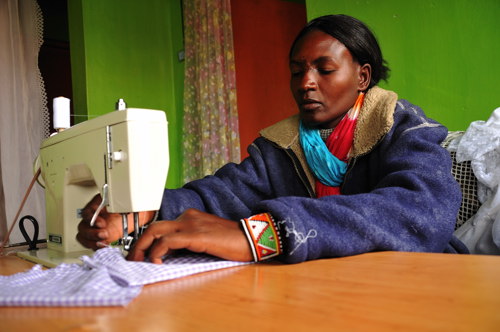
This is Jane. She used to dream of becoming a surgeon, but being too poor to finish school and go to college stood in her way. This did not stop her from living the life she has worked so hard to make for herself and four kids. Jane is a "Mitumba Queen." Mitumba is the business of selling second hand clothing that arrives in Kenya from European and American regions in massive bales. This second hand system not only provides jobs, but is very competitive and profits are low. Jane has modified her business from buying to selling and created a niche.

Jane buys clothing from Mitumba and adds value by taking these clothes apart and re-making clothing for local Kenyans. Her specialty is girls dresses. She makes things you would never find in Mitumba-Sunday best! The frilly, pretty, lacy dresses are for special occasions. Jane buys used wedding dresses for Ksh 500 (USD 7) and from each one she can create three girls dresses and sell each for Ksh 1,500 (USD 21). It takes her only 45 minutes to sew each one and she can make and sell up to 40 per month making a generous profit which has literally allowed her to step out of poverty.

BORGEN PROJECT

Jane's story is inspiring. She has significantly changed her life for the better. From slums to entrepreneur, her microcredit success has saved her life and her kids' lives. She has taught three others how to sew.

-Shereen Alibhai

SOURCE: AfriGadget

Oct 8, 2010

African Entrepreneurs Develop Apps to Increase Quality of Life


The U.S. Department of State recently concluded a contest that challenged African entrepreneurs to develop apps that would serve their community. African developers used their talents and creativity to solve both everyday problems and the unique challenges that African communities face. This coincides with Millennium Development Goal #8: Developing a global partnership for development. These problems were tackled head-on by African developers who were intimately familiar with the problems and struggles of their community, but were supported by the U.S. State Department as well as private contributors such as iHub, Appfrica Labs, and SODNET.

These inventors have shown that people can make a difference simply by looking at common, everyday problems and asking themselves, "What can we do to fix this?" The elimination of poverty does not necessarily come a giant leap at a time, but through incremental steps.

So what was the winner? An application designed to monitor the fertility of cows. For farmers who do not always have the funds to give their cows the proper nutrition, they can use this application to determine the best days to provide nutrition for both the mother and the calf. This tool will help with breeding, feeding, and will increase the health of the newborn.

Other tools developed include software that can report government corruption in real-time, budgeting tools for expecting mothers, and a program that can use text messaging to provide death and funeral announcements to friends and family (Newspapers are too costly).

-Corey Cox

SOURCE: U.S. Department of State

Oct 6, 2010

Mo Ibrahim Index Shows Progress in Africa


Mo Ibrahim is a Sudanese telecoms entrepreneur known throughout the world as a promoter of good governance and leadership in Africa. Each year his foundation releases an index to measure progress in Africa. The goal is to stimulate debate on good governance, provide criteria by which citizens can hold their governments accountable, and recognize and support achievement in Africa. It measures four broad categories: Safety and Rule of Law; Participation and Human Rights; Sustainable Economic Opportunity; and Human Development.

The 2010 Index, released Monday, shows impressive gains in human and economic development in many African countries. 41 of Africa's 53 states showed progress in sustainable economic development. 44 states showed significant improvements in human development, particularly in health and welfare. While no country had significant decline in these categories, there are bigger successes than others. Angola, Liberia, and Togo all show significant improvements in governance performance scores, the report stated. The overall highest scorers were Mauritius with a score of 82 out of 100, the Seychelles with a 75, and Botswana at 74.

-Erica Stetz

Sep 26, 2010

African Development Bank Gives Tanzania Money for Water


On September 15, the Board of Directors of the African Development Bank (AfDB) approved $98 million to go towards a Tanzanian program focused on increasing rural water supplies. Tanzania's long-term development plan was implemented to meet the MDGs in 2001. The first phase of the water project is already completed. It provided 8,250 operational water points serving 1.9 million people. Another part of the program involved building 370 demonstration latrines, through which 1.5 million people were educated about sanitation and hygiene.

The program is designed to sustainably improve health and quality of life for rural Tanzanians. Before implementation, half of all Tanzanians did not have access to a safe water supply. Those who did often had to walk long distances, negatively impacting economic development. Tanzania's aggressive program will reduce the spread of waterborne illness, help with poverty eradication, provide safe drinking water to almost 5 million people, and 10 million will benefit from the sanitation and hygiene program. Go Tanzania!

-Erica Stetz

Related Posts Plugin for WordPress, Blogger...